India produces over 9 million tonnes of plastic waste every year: this contributes to 20% of global plastic pollution. Shop owners and wholesalers deal with rising costs and landfill overflow, especially in busy cities like Mumbai, Delhi, and Bengaluru.
The once-conventional plastic carries long-term risks. Most plastics take centuries to break down, choking rivers, coastlines, and even entering our food chain. Sadly, only a fraction (about 12%) ever gets recycled in India, and much is openly burned, creating dangerous air pollution. Urban businesses face growing pressure from local rules and customers to reduce plastic in their operations.
Switching to compostable garbage bags isn’t just about compliance; it’s about joining India’s movement towards cleaner waste management. New, plant-based garbage bags are changing how Indian businesses collect and dispose of trash. These eco-friendly waste bags offer easy transitions away from plastic, letting companies manage waste more responsibly.
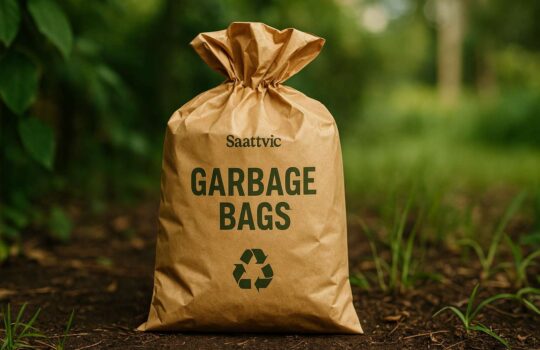
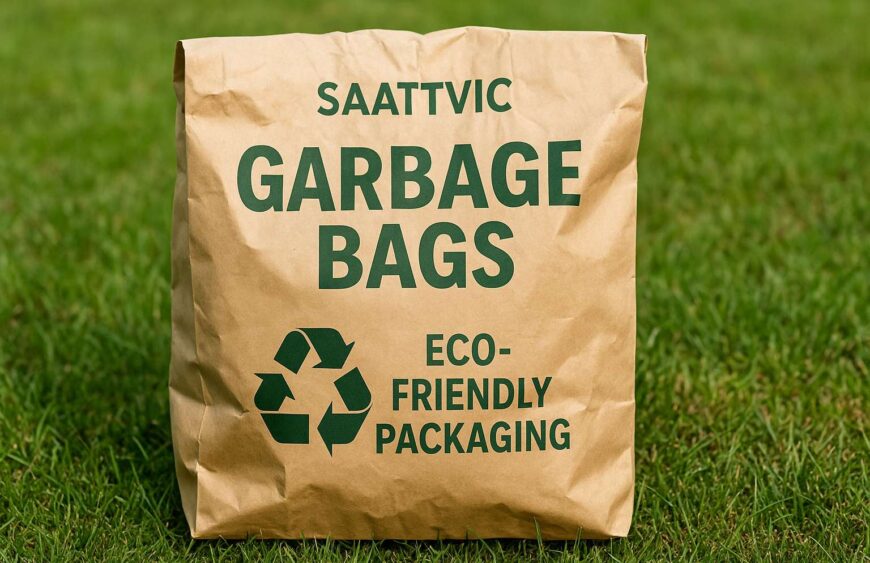
For wholesalers and shop owners across India, compostable bin liners represent the future. Saattvic, a leader in this eco-revolution, makes switching simple. We shall discover how compostable garbage bags are a better option compared to plastic bags in this blog.
Ready to know more? Let’s dive in.
How Compostable Bags Break Down Naturally
Compostable garbage bags break down within three to six months in a composting environment. These plant-based garbage bags need heat, moisture, and oxygen to fully decompose. In contrast, regular plastic trash bags can take over 500 years to break down, clogging landfills and urban drains across India.
Most compostable bin liners and eco-friendly waste bags in India are made from cornstarch, PLA, or other plant-based materials. Microbes in composting facilities consume these materials, leaving only water, carbon dioxide, and nutrient-rich compost behind.
Nothing toxic remains, so soil and groundwater stay safe: a key win for businesses tackling India’s plastic waste crisis.
Choosing compostable alternatives gives shop owners visible results—bags disappear in months, not centuries. India’s waste sector is moving fast. Compostable garbage bags help keep up with stricter rules and rising expectations, especially in cities.
Now, let’s take a look at the certifications to check before making the switch.
Certifications to Trust
When switching to compostable garbage bags, certifications give businesses confidence in product quality and environmental claims. Not all compostable, biodegradable, or plant-based garbage bags are created equal.
Verified certifications demonstrate compliance with rigorous international and Indian standards, ensuring the bags decompose without releasing toxins or microplastics.
Wholesalers and shop owners must look for well-known brands to reduce risk while embracing eco-friendly waste bags. In India, certifications also help align with the Central Pollution Control Board (CPCB) regulations and plastic waste management rules.
The following are the key certifications to look for when evaluating compostable bin liners and garbage bags.
BPI
The Biodegradable Products Institute (BPI) certification is a leading international standard proving products can biodegrade completely in industrial composting conditions within 180 days. The BPI logo on compostable garbage bags signals that independent labs tested the material for compostability and non-toxicity.
For Indian businesses, using BPI-certified bags means reliable waste disposal aligned with global expectations and supports marketing sustainability claims confidently.
EN13432
EN13432 is a European standard that certifies products as compostable based on strict criteria: biodegradation rate, disintegration, ecotoxicity, and heavy metal content. Compostable garbage bags with EN13432 certification have passed tests ensuring they break down fully and safely in commercial composting facilities, typically within 12 weeks.
This certification also aligns with many Indian municipal waste guidelines, giving wholesalers and stores confidence about bag disposal and environmental impact.
Indian Standards: The CPCB Approval
In India, compostable garbage bags must meet the Indian Standard IS/ISO 17088 to ensure product safety and compliance. The CPCB licenses and approves manufacturers of compostable plastics under updated plastic waste management rules.
Labels on compostable bin liners typically show the manufacturer’s certification number and approval. This legal validation is essential for Indian wholesalers to avoid fines and support the government’s plastic reduction goals.
Disposal Methods in India: Practical Steps for Shops and Businesses
Proper disposal is vital for compostable garbage bags to work their magic. In India, shop owners may use two main ways: home composting and industrial composting.
Home Composting
For home composting, check that your compostable bin liners are “home compostable”. Tear large bags for faster breakdown, and mix them with equal parts wet and dry waste. Turn your compost pile regularly. This speeds decomposition and keeps odors away.
Industrial Composting
Many Indian cities now support industrial composting. Businesses can connect with local waste managers or municipal facilities to dispose of eco-friendly waste bags safely. Make sure your bags display certifications and follow the collection guidelines set by the city.
The Perks of Effective Disposal
Correct disposal diverts garbage from landfills, reduces methane, and creates nutrient-rich compost. These practices give Indian wholesalers, cafes, and shops a real role in sustainability.
Proper disposal is key for compostable garbage bags to work as promised. In India, shop owners can rely on two main methods: home composting or sending garbage bags to an industrial composting facility.
Getting disposal right does more than cut landfill waste: it helps create nutrient-rich compost and keeps shop compliance strong. Saattvic’s certified compostable garbage bags make this process simple for wholesalers and store owners, supporting India’s push for cleaner waste management.
Next, let’s address durability and everyday performance concerns.
Addressing Durability and Performance Concerns
Strength
Worried about strength? Compostable garbage bags are now as tough as many traditional plastic options. Leading Indian brands use special, plant-based materials for extra durability. These eco-friendly waste bags can handle both wet and dry waste: no leaks, no mess.
Innovation
Innovation keeps raising standards. Many certified biodegradable trash bags feature reinforced bottoms and tear-resistant designs. Larger sizes can safely handle commercial or kitchen waste. Plant-based garbage bags also control odors well, important for Indian shops with busy bins.
Storage
Storage is rarely an issue. Compostable bin liners keep well in cool, dry places—just avoid moisture to maintain strength. The best ones work across offices, restaurants, housing societies, and food outlets alike.
Indian shops can rely on certified bags for everyday jobs. Most compostable garbage bags designed for wholesale in India are strong enough for business needs, while leaving the earth better off when disposed of.
With durability sorted, let’s see the environmental and branding gains that sustainable packaging brings to Indian businesses.
Sustainable Packaging and Environmental Footprint: What Your Business Gains
Compostable garbage bags help Indian businesses shrink their carbon footprint. These eco-friendly waste bags break down into non-toxic matter, cutting plastic pollution. Compared to plastic, compostable bin liners release 80% less carbon during manufacturing.
Switching also supports better waste segregation. Clear labeling makes sorting waste easier for staff, boosting compliance with municipal laws in cities like Mumbai and Bengaluru. Compostable bags are accepted in wet waste bins and composting systems, so they never end up clogging drains.
Consumers notice too. Businesses that use plant-based garbage bags signal care for the environment: strengthening brand value and meeting growing demand for sustainable solutions in India.
Saattvic’s compostable solutions help wholesalers lead India’s green packaging movement: one sustainable switch at a time.
Make the Switch with Saattvic: The Pitstop for Wholesale Buyers in India
Ready to ditch old plastic for good? Saattvic’s compostable garbage bags offer leak-proof strength, made for the messiest loads but gentle on the earth.
We support Indian wholesalers with fast delivery, tailored sizes, and certified, plant-based garbage bags for every shop. Let’s move your business forward together: towards real sustainability and a cleaner tomorrow.
Lead the Way in Compostable Innovation with Saattvic
Plastic waste poses a challenge for every business in India. Compostable garbage bags change the story; they break down quickly, add nutrients to soil, and leave no trace of microplastics behind.
Using plant-based garbage bags means brands show real commitment and responsibility: an action Indian clients look for every day.
With innovative solutions, strict certifications, and tailored bulk orders, Saattvic propels businesses forward. Our support goes beyond just products: we help partners lead India’s green revolution, ensuring smooth transitions with ongoing guidance and results that truly matter.
Ready to join thousands of businesses making sustainable choices? Bulk order compostable garbage bags from Saattvic and lead the change for a greener India: start today!